 The Bound Leaf
Your first hand-sewn book
Start with a small notebook. A single folded section lets you learn the rhythm of sewing without glue, a press or expensive equipment.
1. Fold the section
Fold each sheet in half to A5, keeping the edges aligned. Crease with a clean fingertip or bone folder, then nest the six sheets inside one another. Fold the card separately and place it around the paper. This nested group is your section, also called a signature.
2. Mark three holes
Open the booklet at its centre and clip the layers together. Mark the centre of the fold, then a point about 3 cm from each end. Working on a protective surface, pierce through all layers at the three marks. Keep fingers clear of the awl’s path. An adult should prepare holes for a child.
3. Sew the spine
Follow the four drawings in order. Each shows a section along the fold: the centre pages are on the left and the outside cover is on the right. The solid arrow shows the current needle route; dashed lines show earlier stitches. The thread is spaced out so you can follow it.
Sewing step 1: Start at the middle
Take the needle from inside to outside through the middle hole. Leave an 8 cm tail inside.
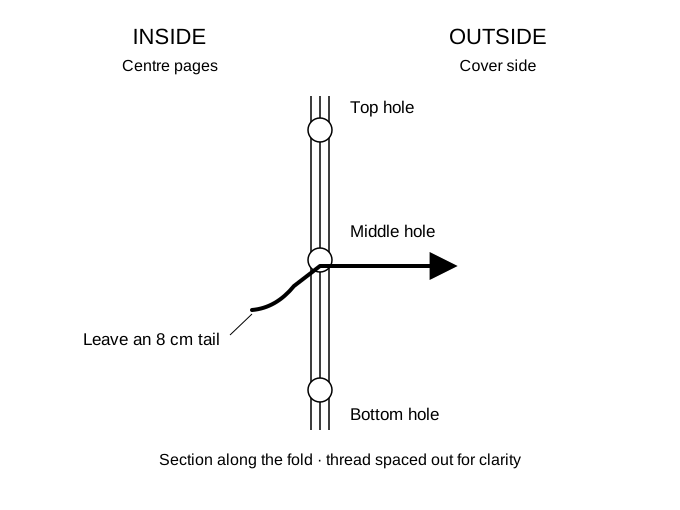
Inside → outside
Sewing step 2: Return through the top
Carry the working thread along the outside, then take the needle in through the top hole.
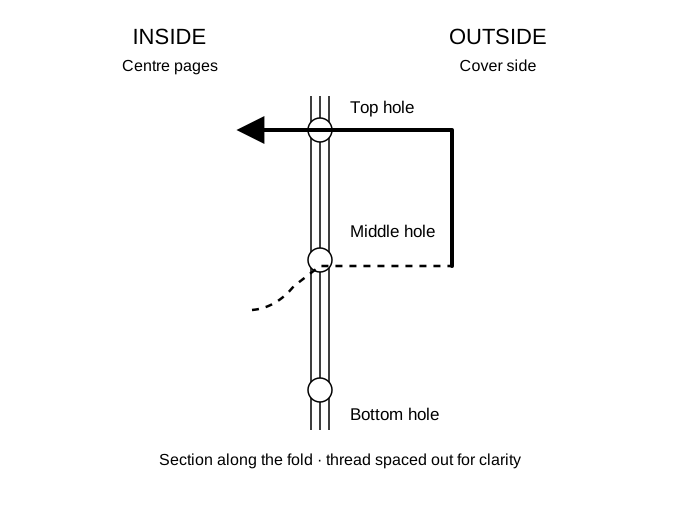
Outside → inside
Sewing step 3: Go straight to the bottom
Carry the thread along the inside from top to bottom, skipping the middle hole. Pass out through the bottom hole.
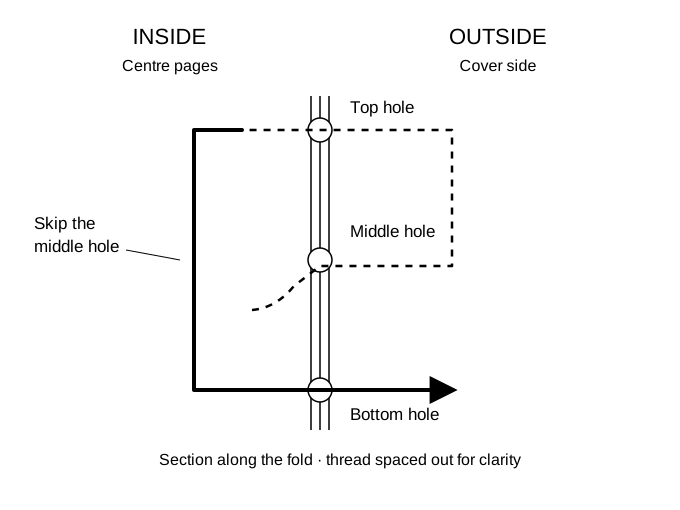
Inside → outside
Sewing step 4: Finish through the middle
Bring the working thread along the outside and return in through the middle hole. Avoid piercing the existing thread.
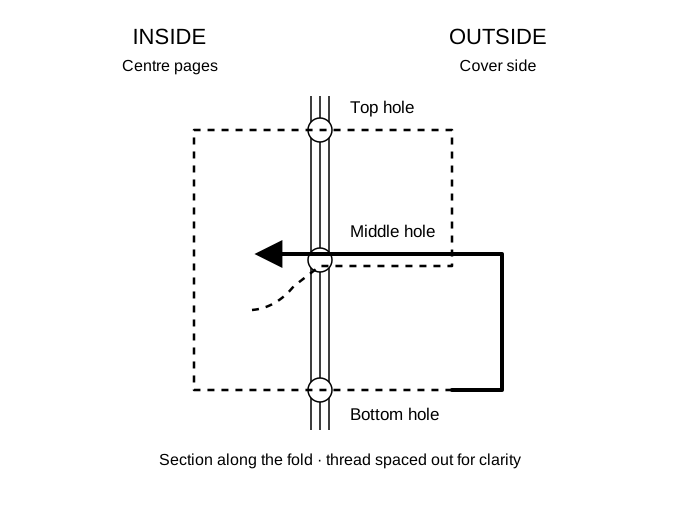
Outside → inside
4. Tie and finish
Arrange the two loose ends on opposite sides of the long inside stitch. Gently remove slack, keeping the paper flat, and tie a square knot around that long stitch: right over left, then left over right. Trim the tails to about 2 cm.
Check your work
The cover should sit securely and the pages should turn easily. Puckered paper means the thread is too tight; loose loops mean it needs a little more tension. A small step at the fore-edge is normal with nested sheets. Leave it as it is for this first project.
This is a new-book craft project. Do not use it to re-sew an old or valuable book.
Read next