 The Bound Leaf
Get to know paper grain
Paper often bends more easily in one direction than the other. Learning to notice that difference makes your handmade books more pleasant to open.
1. Grain direction and the fold
Grain describes the main direction in which the paper fibres lie. For a folded book section, arrange the grain parallel to the fold that becomes the spine.
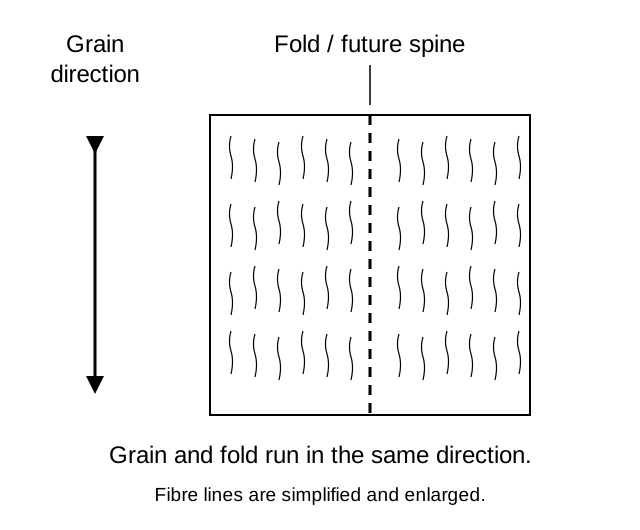
The dashed line is the fold. The thin lines represent fibres, enlarged for clarity; they are not normally visible like this. View the drawing at full size.
A simple bending test
Take a spare sheet from the paper you plan to use. Gently curve it from side to side without creasing, then repeat from top to bottom. Compare the resistance. The easier bend usually indicates that the grain runs parallel to the axis of that curve.
Confirm with a scrap
On two small scraps, make folds at right angles to one another. Compare the results: the fold parallel to the grain is usually cleaner and less resistant. Some papers make the difference much less obvious. Test sacrificial scraps, never a page from an existing book.
Put the grain along the spine
For a small sewn notebook, aim to have the grain run parallel to the folded spine in both the pages and cover. Do not assume that every A4 sheet will fold favourably to A5: paper is supplied in different grain directions.
Make a sample before a batch
Fold four sheets and a piece of your chosen cover card. Nest them, close the booklet and see how it rests. If the card cracks, try a lighter cover and test a gentle scored fold on a scrap. If the booklet springs open, try another paper orientation or fewer sheets.
Read next